
Custom sticker price calculator
Choose your shape, dimensions, material, finish and quantity to see a production estimate for custom stickers. Orders start at 100 pieces. Select your delivery country; shipping, applicable taxes and import terms are confirmed separately. Production follows artwork approval.
Sticker size changes the price as much as quantity.
The calculator estimates production from your selected shape, dimensions, material, finish and quantity. Change an option to compare the resulting price before deciding on your specification.
A sticker needs to work on the surface where it will be used. Paper can suit an indoor parcel seal, while a label exposed to moisture or sunlight may need a suitable vinyl and protective finish. Choose the application first, then compare the printing options.
Printed area matters. Doubling both dimensions multiplies the area by four: 100 stickers measuring 100 × 100 mm cover the same area as 400 stickers measuring 50 × 50 mm. Cutting, material, finishing and setup can still make their final prices different.
The calculator combines your dimensions and production options with the current pricing rules. The displayed amount is a production estimate in EUR excluding VAT. Confirm shipping, taxes and destination requirements before ordering.
The following sections explain the decisions behind each setting, including specialist options that require a bespoke quote.
Build your sticker specification step by step.
Start with the surface and the intended use. Then choose the available production settings and compare the price. Ask the team about options that are not listed in the calculator.
STEP 01
Shape and dimensions
Choose a circle, rectangle, rounded corners or a custom outline from the available options. For a contour cut around your artwork, supply a separate vector cutting path or ask the team to prepare one. Confirm any unusual shape before production.
STEP 02
Material
White, clear, holographic and other specialist vinyls create different effects; kraft gives a paper appearance. Moisture, sunlight, surface texture and handling determine the suitable construction. Confirm outdoor and washing requirements for the selected material and adhesive.
STEP 03
Finish and protection
Compare the finishes available for your chosen product. A gloss or matt appearance is different from a protective laminate. Spot varnish, hot foil and embossing are specialist treatments: request a quote and confirm compatibility if they are not available in the online options.
STEP 04
Supply format
Consider whether you need individual stickers, sheets or rolls. The best format depends on distribution and application. Confirm roll direction, core size and machine requirements with the team rather than assuming that every format is covered by the online price.
STEP 05
Quantity and quotation
Orders start at 100 pieces per design and format. Review the production estimate and request a bespoke quote for any unlisted requirement. Quotes are prepared within 48 working hours. International quotations normally use DAP terms; shipping and applicable import charges must be confirmed for your destination.
What determines the price?
The price combines printed area, material, cutting, finish and quantity. Setup costs are spread across the run, so a larger order can reduce the price per sticker. Compare actual configurations rather than applying a fixed percentage saving.
Choose the material for the conditions it will face.
Start with the surface, moisture, sunlight and handling. A paper label for dry indoor use has different requirements from a vinyl sticker on a bottle or window. Confirm the specification before choosing on appearance alone.
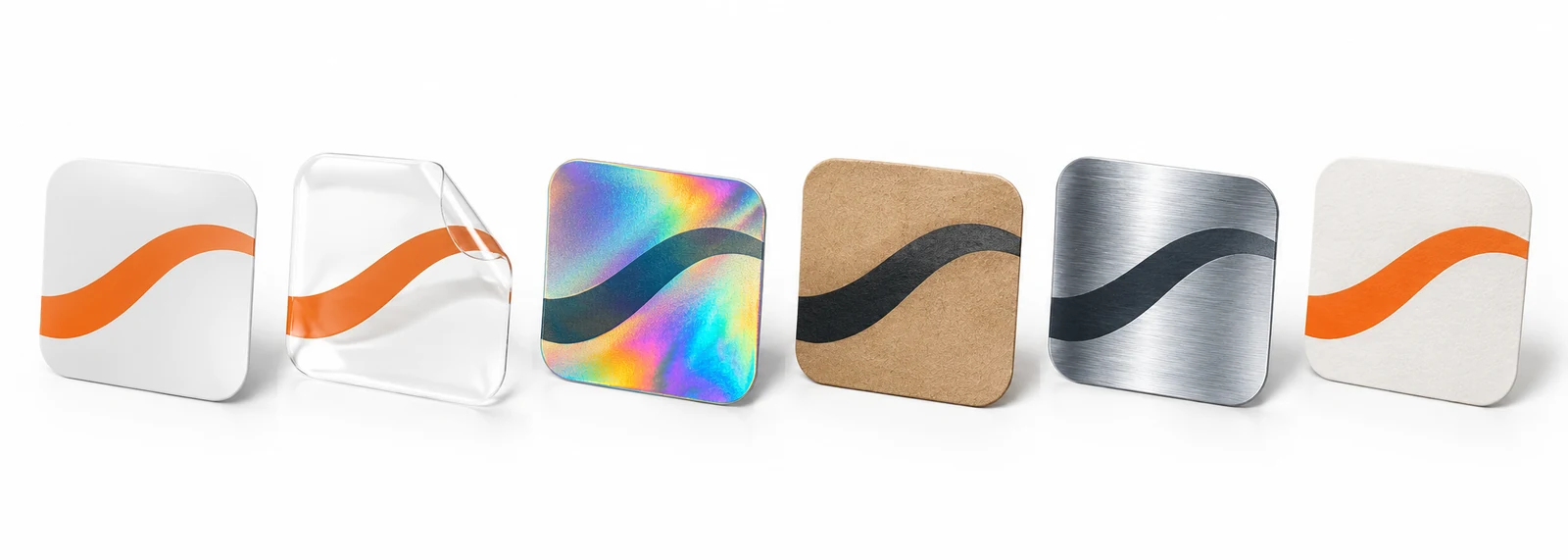
| Material | Outdoor use | Water and washing | Typical application | Price basis |
|---|---|---|---|---|
| White vinyl | Confirm the laminate and exposure | Confirm the specification | Product labels, windows and branded stickers | Compare online options |
| Clear vinyl | Confirm the laminate and exposure | Confirm the specification | Glass, windows and transparent packaging | Compare online options |
| Holographic | Confirm for outdoor exposure | Confirm the specification | Collections, merchandise and limited editions | Compare online options |
| Gold or silver metallic | Confirm for outdoor exposure | Confirm the specification | Seals and premium packaging | Project-specific quote |
| Kraft paper | Dry indoor use | Not for repeated washing | Parcel seals, craft jars and pouch closures | Compare the selected option |
| Coated paper | Dry indoor use | Not for repeated washing | Price labels and logistics marking | Project-specific quote |
Start with the conditions of use. Will the sticker face water, sunlight or washing? If so, confirm a suitable material, laminate and adhesive. Paper can suit a dry indoor parcel seal or price label. Select the construction for its application rather than assuming that every vinyl or paper behaves the same way.
Decorative effects and practical protection.
Finishes change how a sticker looks and feels. A suitable laminate can also protect the print. Compatibility, outdoor life and washing performance depend on the complete construction and must be confirmed for your use.

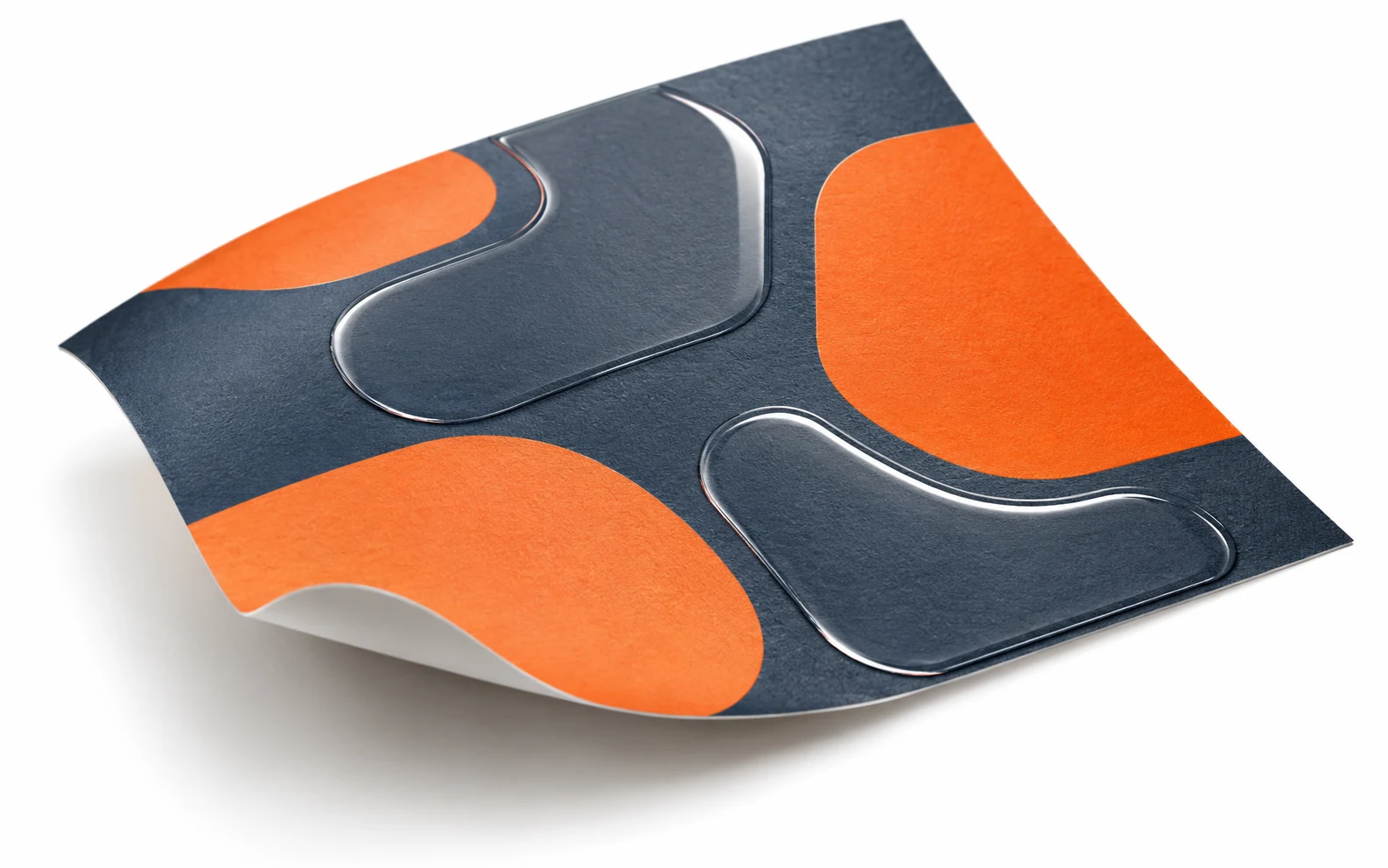

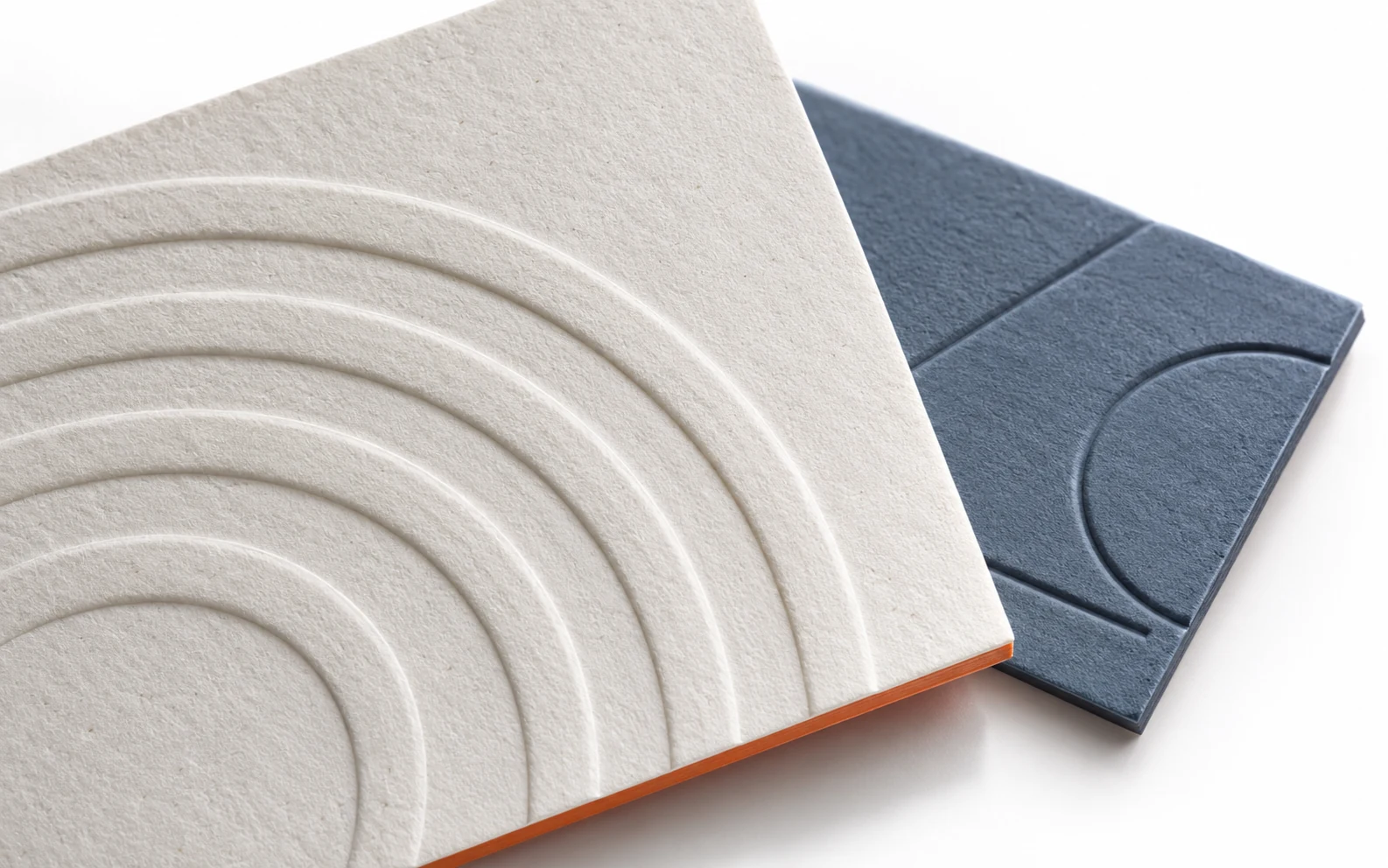
Lamination is a protective layer
A transparent laminate sits over the print. Depending on its specification, it can help protect against abrasion, moisture and UV exposure. It can have a gloss or matt appearance.
Outdoor performance depends on the complete sticker construction. Tell us the expected exposure and application surface so the team can confirm a suitable material, adhesive and protective finish. Do not treat a general service-life estimate as a warranty.
For indoor use, protection can still matter on frequently handled items such as laptops, reusable bottles and folders. A temporary label on a dry parcel may have different priorities.
Individual stickers, sheets or rolls.
The supply format affects handling as well as production. Think about who will apply the stickers, how many they will apply and whether a machine is involved.
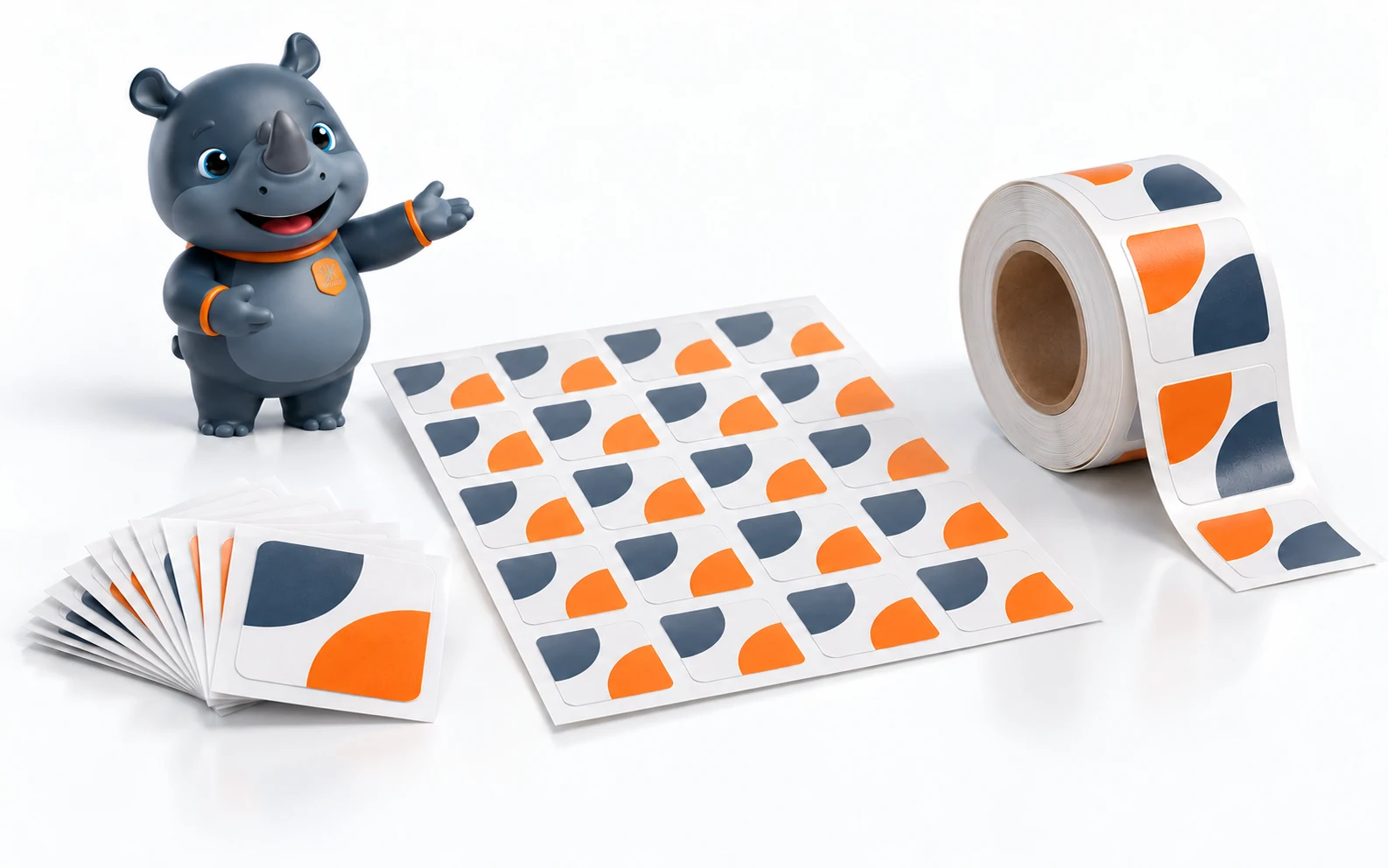
- Individual stickerseach sticker is supplied separately for distribution, resale or customer packs. Confirm the cutting and backing requirements.
- Sticker sheetsseveral pre-cut designs can share a sheet. Define the layout and the number of complete sheets before requesting a quote.
- Roll labelslabels are supplied on a continuous liner for repeated manual or machine application. Confirm core size, roll diameter and unwind direction.
Consider application time as well as print cost. When labels are applied repeatedly, the supply format can affect handling time. Compare sheets and rolls against your actual process and equipment. Confirm the production cost and minimum quantity for each option.
For roll labels, specify the unwind direction and whether the print faces inwards or outwards. The core diameter, often 40 or 76 mm, and the maximum roll diameter must match your equipment. Confirm the exact requirements before ordering.
Protect the detail around the cutting line.
Artwork issues often become visible at the edge of a sticker. Prepare bleed, a clear cutting path and an internal safe area, then check the digital proof before production.
- 2 mm bleedextend the background 2 mm beyond the cutting path on every side. This helps avoid an unprinted edge if the cut moves slightly. Confirm the supplied template for your job.
- 3 mm safe areakeep important text and logos at least 3 mm inside the cutting line. Avoid placing critical details against the edge.
- Cutting pathsupply a vector path on a separate, clearly named layer for custom contours. Ask the team about preparation if you do not have one.
- 300 dpi at final sizeraster images need sufficient resolution at their actual print size. A small web image may look sharp on screen but print poorly when enlarged.
- CMYK print coloursprepare artwork in CMYK and provide a Pantone reference for critical colours where applicable. Screen colours and print colours can differ; approve the agreed proof.
For custom shapes, avoid extremely thin points and deep internal corners. They can make cutting and peeling difficult. A slightly rounded outline and a 1–2 mm border around the artwork can give a cleaner result. The cutting path and border must be agreed in the proof.
Why two sticker specifications cost different amounts.
Printed area, cutting, finishing and setup all contribute. A short run spreads its fixed preparation work across fewer pieces.
- Printed areawidth and height determine the area of each sticker. Doubling both dimensions multiplies that area by four; the complete price also depends on material and production settings.
- Cuttingstandard shapes and custom contours have different preparation requirements. Confirm whether tooling or artwork preparation is included in your chosen option.
- Lamination and finishingprotective films and decorative treatments add material and production steps. Specialist treatments may require tooling and a separate quotation.
- Setupmachine preparation is spread across the production run. This is one reason a short run can cost more per piece than a larger order.
A larger quantity can lower the unit price by spreading setup costs across more pieces. The amount of that reduction depends on the selected product and current pricing tiers. Compare the actual totals shown for your specification.
If you have several designs, tell the team before placing separate orders. A sheet layout or a combined production plan may be appropriate; minimum quantities and any saving must be confirmed for the job.
Six starting points for your sticker brief.
Use these examples to define your requirements. Some specialist combinations need a bespoke quote and are not automatic calculator options. Confirm the final material, finish and supply format for your surface.
| Application | Material | Finish | Supply format | Example size |
|---|---|---|---|---|
| Jar or bottle label | White vinyl or coated paper | Matt with specialist spot varnish | Roll | 60 × 40 mm |
| Parcel or pouch closure | Kraft paper | Uncoated appearance | Roll | 40 mm circle |
| Branded sticker or merchandise | Laminated white vinyl | Matt | Individual | 70 × 70 mm |
| Limited edition or collection | Holographic | Gloss laminate | Sheet | 50 × 50 mm |
| Window or vehicle graphic | Suitable clear vinyl | Protective laminate to specification | Individual | 200 mm or larger |
| Brand seal | Silver metallic | Specialist hot foil | Roll | 25 mm circle |
Check the size where the sticker will be used. A small sticker may fit a laptop, bottle or notebook more easily than a large one. Print a paper template at actual size and check the intended surface before placing your order. Bigger is not automatically more useful.
If you are considering two designs, ask whether a combined sheet is suitable. It can provide a useful set for customers, but the sheet layout, minimum quantity and price need to be checked before production.
Prepare the surface before peeling the liner.
Dust, grease, moisture and poor contact can cause bubbles or lifting. Follow the application instructions for the selected adhesive and test an inconspicuous area if the surface is delicate.
- Clean and dry the surfaceremove dust and grease with a cleaner suitable for the surface. Test delicate finishes first and allow the area to dry.
- Position before peelingcheck alignment with the liner in place. Peel back a small section and avoid stretching the material.
- Work from the centre outwardsuse a soft squeegee or another suitable tool to press out air without scratching the print.
- Allow the adhesive to bondallow the adhesive to bond before washing or heavy handling. Follow the curing time confirmed for the selected adhesive and conditions.
Wet application is not suitable for every adhesive. Some large-format vinyls can be positioned with an approved application fluid, but others need dry application. Confirm the method and any application tape with the team before using water or detergent.
Textured plastics, unfinished wood and delicate paint need special care. Rough surfaces can reduce adhesive contact, while porous or fragile finishes can make clean removal difficult. Test suitability and confirm the adhesive before ordering.
For removal, gentle heat and a slow, low-angle peel may help on suitable surfaces. Test any cleaning solvent first and follow the surface and adhesive manufacturer’s instructions. Clean removal is not guaranteed on every material.
Confirm the production and delivery plan for your order.
The minimum order is 100 pieces per design and format. Production starts after artwork approval. Sampling, quality checks and transit must be planned for your specification and destination.
The 100-piece minimum applies per design and format. Separate designs normally count as separate references. For a sheet containing several designs, confirm whether the minimum applies to the number of complete sheets.
A sample can help assess material and cutting. Confirm its price, any credit against the production order and the delivery schedule in your quotation. Artwork colours and cutting details must also be approved on the agreed proof; a general sample is not a substitute for that check.
Questions to answer before you order.
Will my stickers withstand outdoor use?
A suitable vinyl with the right protective finish may be appropriate for outdoor use. Tell us the exposure, expected lifetime and surface so the team can confirm the construction. Paper is normally intended for dry indoor applications. Outdoor life depends on the actual specification and conditions.
Can the cutting line follow my logo?
Yes, a custom contour can follow your logo. Supply a vector cutting path on a separate, clearly named layer, or ask the team to prepare it and confirm any artwork charge. Avoid very thin points and deep internal corners. Check the final outline and border in the digital proof.
What is the difference between gloss and lamination?
Gloss describes the appearance; lamination describes an added protective film. A laminate can be gloss or matt. Its resistance to UV, abrasion and water depends on the specification. A glossy print without that film does not automatically provide the same protection.
How much does each custom sticker cost?
There is no single unit price for every sticker. Dimensions, material, cutting, finish and quantity all matter. Use the calculator to compare a production estimate for your settings, then confirm shipping, applicable taxes and destination requirements before ordering.
Can one order contain several designs?
Several designs can sometimes be combined on a sheet or planned within the same production order. Explain how many designs and pieces you need. The team will confirm the layout, minimum quantity and price; do not assume that different designs share one minimum automatically.
Are the stickers suitable for a dishwasher or reusable bottle?
Specify the washing and temperature conditions before ordering. A water-resistant sticker is not automatically dishwasher-safe. Material, ink, laminate, adhesive and the bottle surface all affect suitability. Follow the agreed curing time and care instructions, and request confirmation for repeated washing.
Should I choose permanent or removable adhesive?
Permanent adhesive generally suits long-term branding; a removable adhesive can be useful for temporary window graphics or seasonal campaigns. Clean removal depends on the surface, exposure and time in use. Confirm those conditions and test the selected adhesive first.
How do I apply a large sticker without bubbles?
Prepare a clean, dry, compatible surface, position the sticker and work from the centre towards the edges with a soft squeegee. Some large-format vinyls allow wet application, but others do not. Follow the instructions for the selected construction and confirm whether application tape is included.
How long will production and delivery take?
The indicative production time is 3–6 working days after artwork approval, subject to confirmation for your order. Quality checks and international transit are additional stages. The delivery country, shipping method and customs process affect the total schedule. Confirm the dates in your quotation; no single worldwide delivery period applies.
Does the calculator show the final delivered price?
The calculator shows a production estimate in EUR excluding VAT. Shipping, applicable taxes and import charges are confirmed separately for your delivery address. International quotations normally use DAP terms, with import duties and import VAT payable on arrival. Check the final order summary and agreed quotation before payment.
Need a specialist sticker? Request a quote within 48 working hours.
Large formats, specialist adhesives, tamper-evident labels, white ink on clear material, numbering and bespoke packing need a project-specific review. Send the intended use, dimensions, quantity and artwork requirements to the team.